Best Fountain Pen Inks for Beginners
By NibPath . 7 min read . Updated June 2026
Choosing your first fountain pen ink is easier than the community forums make it look. The number of options is genuinely large, but the properties that matter for a beginner narrow down to four: does it flow reliably, does it dry in a reasonable time, does it feather on common paper, and does it clean up without a fight? This guide walks through those properties and picks the inks that deliver on all of them before graduating to shimmer inks or iron gall formulas.
Quick answer
Pilot Iroshizuku and Diamine are the best starting inks for beginners. Both flow smoothly in any nib, behave on most paper, and are available from multiple retailers. Avoid shimmer and iron gall inks until you have cleaned a pen at least once and understand your paper's dry time tolerance.
This guide contains affiliate links. NibPath may earn a commission at no cost to you.
Why ink choice matters more than you think
Most new fountain pen writers assume the pen does all the work. In practice, the ink determines roughly half of the writing experience. A smooth pen paired with a dry or slow ink writes differently than the same pen with a well-lubricated dye ink. Flow consistency, dry time, and paper interaction all come from the ink formulation, not the nib.
For a first ink, you want something that flows generously without being so wet it feathers on standard office paper, dries in under fifteen seconds on most notebook surfaces, and flushes easily when you want to switch colors. Pilot Iroshizuku Tsuki-yo Ink checks all three without requiring any paper testing or nib adjustment. Diamine Aurora Borealis Shimmer Ink is a lighter alternative that performs almost as well and opens the door to shimmer at a forgiving level.
The inks to skip for a first buy are anything iron gall (Diamine Registrar's Blue-Black Ink, Sailor Sei-boku Pigmented Ink) and anything heavily shimmer-loaded. Iron gall requires attentive cleaning schedules you may not know to follow yet. Heavy shimmer in a fine nib risks clogging a pen you have only owned for a week.

Pilot Iroshizuku Tsuki-yo Ink
A saturated teal-green dye ink from Pilot's prestige Iroshizuku line with smooth, consistent flow, moderate shading, and zero shimmer. One of the most-recommended inks for daily writers who want a distinctive color without fuss.

Diamine Aurora Borealis Shimmer Ink
A teal-to-blue shimmer ink from Diamine's Shimmertastic line with fine copper and gold particles. More forgiving for medium nibs than the J. Herbin 1670 and priced accessibly.
The five properties to understand before buying any ink
Flow refers to how readily ink moves through the nib feed to the paper. A dry ink requires more writing pressure and may skip on upstrokes. A very wet ink soaks into paper and feathers at the edges of strokes. Most dye inks like Pilot Iroshizuku Tsuki-yo Ink and Robert Oster Fire and Ice Ink land in the middle: generous enough to feel smooth, controlled enough to stay sharp on 80 GSM paper.
Dry time matters if you are left-handed or write quickly. Dye inks on coated or sized paper (Sakae Technical Paper Tomoe River Notebook paper, for example) dry slowly because the surface resists absorption. The same ink on a Rhodia or Clairefontaine notebook dries faster because the paper is more absorbent. Always test a new ink on your actual notebook before writing a full page.
Shading is the variation in ink intensity within a single stroke. Robert Oster Fire and Ice Ink is among the highest-shading inks available; Noodler's Bulletproof Black Ink is one of the flattest. Shading is a matter of preference, not quality, and is more visible in medium and broad nibs than in fine or extra-fine.
Water resistance ranges from none (most standard dye inks wash off completely when wet) to near-total (Noodler's Bulletproof Black Ink, Sailor Sei-boku Pigmented Ink). For a beginner's everyday notebook, water resistance rarely matters. It becomes important for addressed envelopes, legal documents, or journaling in outdoor environments.
Cleanability is how much effort a flush requires when switching inks. Standard dye inks from Pilot, Diamine, and J. Herbin flush clean in three to five bulb syringe cycles with plain water. Iron gall inks stain feeds slightly and require pen flush solution or longer soaking. Shimmer inks require very thorough flushing to remove metallic particles from the converter or piston mechanism.
The three best starter inks and why
Pilot Iroshizuku Tsuki-yo Ink is the most-recommended first ink in the enthusiast community for good reason. It flows consistently across nib sizes, produces gentle shading in medium and broad nibs, and cleans up easily with plain water. The 50ml bottle lasts most writers six months to a year at daily journaling pace. The color is a distinctive teal-green that looks nothing like a ballpoint.
Diamine Registrar's Blue-Black Ink is the right answer if you need something water-resistant for documents or outdoor use. It is an iron gall formula, which means it requires cleaning every one to two weeks, but the archival permanence is genuine. Buy a small 30ml bottle first to test your cleaning habits before investing in a larger volume.
Robert Oster Fire and Ice Ink is the best starting shimmer-adjacent pick without the actual shimmer maintenance burden. It is a dye ink with a vivid blue-red color split that produces visible shading and color variation in every stroke. No metallic particles, no clogging risk, and it cleans in plain water. The tradeoff is that it offers zero water resistance, so it is a notebook ink only.
Pilot Iroshizuku Tsuki-yo Ink
A saturated teal-green dye ink from Pilot's prestige Iroshizuku line with smooth, consistent flow, moderate shading, and zero shimmer. One of the most-recommended inks for daily writers who want a distinctive color without fuss.

Diamine Registrar's Blue-Black Ink
A traditional iron gall blue-black ink that dries to a permanent, water-resistant mark. Widely used for legal documents and archival writing. Requires regular cleaning to prevent corrosion.

Robert Oster Fire and Ice Ink
An Australian boutique ink with a vivid blue-red tonal split that produces dramatic shading and color variation across strokes. Dye-based, not water-resistant, but a show-stopping choice for notebooks and letters.
When to move up to shimmer and iron gall
The right time to try J. Herbin 1670 Anniversary Ink or Diamine Aurora Borealis Shimmer Ink is after you have cleaned a pen at least twice and understand what your flushing routine looks like. Shimmer inks require more thorough flushing because metallic particles settle in converter chambers and nib feeds. The cleaning process is not difficult, but you need a good bulb syringe and pen flush and a habit of flushing before the ink sits for more than two weeks.
Iron gall inks like Diamine Registrar's Blue-Black Ink and Sailor Sei-boku Pigmented Ink are the right move when document permanence becomes a priority. If you are writing journal entries you want to survive a water spill, addressing formal correspondence, or keeping records you need to last decades, an iron gall formula earns its extra maintenance requirement. Move to it intentionally rather than by accident.

J. Herbin 1670 Anniversary Ink
A celebratory collection of shimmer inks with large gold particles suspended in richly pigmented bases. The Rouge Hematite and Bleu Ocean colorways are community favorites. Requires broad nibs and regular flushing.
Diamine Aurora Borealis Shimmer Ink
A teal-to-blue shimmer ink from Diamine's Shimmertastic line with fine copper and gold particles. More forgiving for medium nibs than the J. Herbin 1670 and priced accessibly.

Sailor Sei-boku Pigmented Ink
A blue-black pigmented ink from Sailor formulated to be safe for fountain pens while delivering strong water resistance and fade resistance. Dries quickly and requires more attentive cleaning than dye inks.
Featured in this guide
Pilot Iroshizuku Tsuki-yo Ink
A saturated teal-green dye ink from Pilot's prestige Iroshizuku line with smooth, consistent flow, moderate shading, and zero shimmer. One of the most-recommended inks for daily writers who want a distinctive color without fuss.
Diamine Registrar's Blue-Black Ink
A traditional iron gall blue-black ink that dries to a permanent, water-resistant mark. Widely used for legal documents and archival writing. Requires regular cleaning to prevent corrosion.
Robert Oster Fire and Ice Ink
An Australian boutique ink with a vivid blue-red tonal split that produces dramatic shading and color variation across strokes. Dye-based, not water-resistant, but a show-stopping choice for notebooks and letters.
J. Herbin 1670 Anniversary Ink
A celebratory collection of shimmer inks with large gold particles suspended in richly pigmented bases. The Rouge Hematite and Bleu Ocean colorways are community favorites. Requires broad nibs and regular flushing.
Diamine Aurora Borealis Shimmer Ink
A teal-to-blue shimmer ink from Diamine's Shimmertastic line with fine copper and gold particles. More forgiving for medium nibs than the J. Herbin 1670 and priced accessibly.
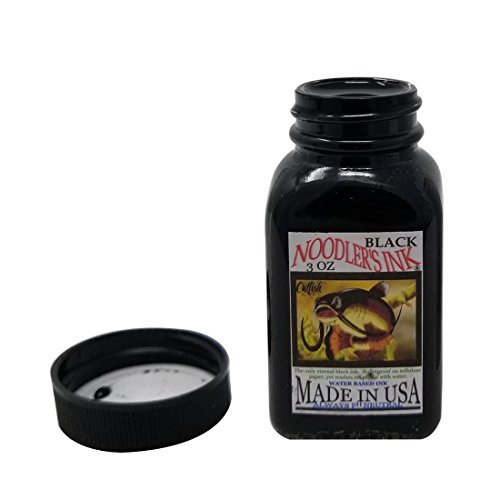
Noodler's Bulletproof Black Ink
A permanently bonding black dye ink formulated to be impervious to water, UV, bleach, and many solvents. The go-to archival black for fountain pen writers who need a document-safe ink without switching to pigmented formulas.
Keep reading
Related comparisons
Related roundups
FAQ
Frequently asked questions
How many bottles of ink do I need to start?+
One. Buy one bottle of a well-reviewed dye ink like Pilot Iroshizuku or Diamine and use it until the pen needs cleaning or you want a new color. The ink-collecting instinct develops quickly in this hobby, but starting with one color you enjoy builds good habits before expanding.
Can I mix fountain pen inks?+
Mixing dye inks from the same brand is generally safe and produces predictable color combinations. Mixing inks from different brands or mixing dye inks with iron gall or pigmented inks risks chemical reactions, sediment, and clogging. Stick to same-brand mixing until you understand the ink chemistry involved.
How long does a bottle of ink last?+
A 30ml bottle lasts most daily journal writers three to six months. A 50ml bottle can last a year or more if you rotate between multiple inks. Ink stored in a sealed bottle does not expire quickly; properly stored bottles last years without quality loss.
Does my ink color affect the pen in any way?+
No. Ink color is purely a dye or pigment choice and does not affect how the pen writes. The formulation properties (wetness, pH, particle content) affect the pen, not the color. A black iron gall ink and a green dye ink can have completely different effects on the pen's feed even at the same color saturation.